Circuits
The majority of households in the U.S. use 120-volt electric circuits that allow both 15 amp and 20 amp current intensity. The most common outlets you will find will be 15 amps.
Receptacles with a 20 amp current have a similar design to the 15 amp ones, with a single exception: an additional horizontal slot, which forks from one of the vertical slots (picture on the left). This enables 20 amp plugs to be inserted directly into the outlet.
When converting amps to watts, a 15 amp circuit is 1800 watts while a 20 amp circuit is 2400 watts. Converting amps to watts is important when it comes to Christmas Lights because this is the measurement used on the labels or boxes of Christmas lights.
Dedicated vs Shared Circuits

Outlets found in households can be either dedicated or shared circuits. A dedicated circuit is used by one appliance only. Meaning the circuit is not shared with any other devices or appliances. While a shared circuit is shared by other outlets in the household.
A good rule of thumb when installing Christmas lights is to stick to 80% max outlet usage. This would be 1440 watts for a 15 amp circuit and 1920 watts for a 20 amp circuit. Not knowing what other appliances or fixtures internally are on the same circuit, this will give you a buffer when it comes to power consumption.
C9 Bulb Wattage
C9 replacement bulbs are typically around .58 watts. Dividing 1440 watts, 80% outlet usage on a 15 amp circuit, your limitations on the amount of C9 .58 watt bulbs would be 2,482, that’s a lot of bulbs. Now this does not mean you can connect one strand with that many bulbs on the line, we will discuss that later in this lesson.
LED Mini Lights
LED mini lights can range from 3.5 to 4.8 watts per strand putting your limitations on a 15 amp circuit to 300-411 strands. We will discuss strand end to end max capabilities later in this lesson.
Limitations
As you read above, the outlet limitations are pretty high for both LED mini lights and C9 LED bulbs. You are however still limited on how many you can use in sequence. In this section we will explain to each product and good rules of thumbs when installing each.
C9 Bulbs-As you read earlier in the lesson, your max bulbs you can have on one socket is 2,482, that’s a lot of bulbs. When it comes to consecutive bulbs on one strand, you are limited to 350. Although you can push the limits with more, 350 bulbs is a good rule of thumb to stick to when installing C9 light line.
Mini Lights-Depending on the wattage of your strands you are using, it is a a good rule of thumb to keep it to 45 strands connected end to end. Once you hit this amount, you will need to start with a new strand and continue until you hit the 45 number again. You can use the same power source whether this is your extension cord or X and Y adaptors, if using coaxial, you just can not exceed the 45 strand count end to end.
X-wire-When using X-wire, you will need to take in consideration all lighting that is connected to it. If you are using roof line lights and tapping into it to connect a wreath, all these lights need to be accounted for. X-wire or zip cord, is has a 7 amp rating. Of course this is the max load it can handle and this number drops as your extension cord gets longer. Here are some numbers you should stick to when connecting a large amount of lights to one extension cord.
Strands
25′ extension cord-142 strands
75′ extension cord-71 strands
Bulbs
25′ extension cord-2,000 bulbs
75′ extension cord-1,000 bulbs
Wire
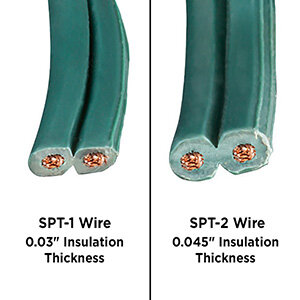
X-wire is going to be your go to when creating extension cords or jumpers. There are 2 main types of wire you will need to choose from, SPT-1 and SPT-2. It is important to choose one and stick to it. You will want to buy your X-wire and your spools in the same size.
SPT Wire (Stranded, Parallel, Thermoplastic) is water resistant, it is not good for long-term outdoor use, it can become brittle in cold weather or soft in extreme heat. You want a cord with an E rating for permanent installs. This means the jacket is made from thermoplastic elastomer rubber (TPE) resistant to sunlight, UV, and extreme weather conditions.
The only difference in the SPT-2 is the thickness of the coating around the copper. There is a perception that because the SPT-2 is thicker you are able to run more lights through it, this is absolutely false.
Why keep it consistent?
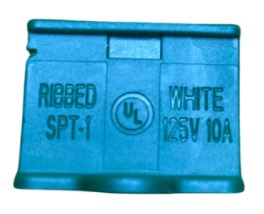
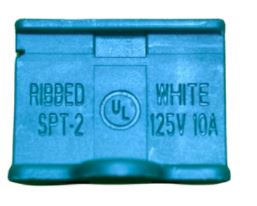
It is important to keep it consistent when placing your x-wire and bulk spool orders. Depending on the route you decide to go, you need to order the corresponding males and females that go along with it. The males and females you order do have print on the them specifying what size they are but this can become a fiasco if you don’t keep them separated. Males and females of 2 different sizes that get mixed together can be a nightmare to sort. As you can see below, when mixed together or at night time, they can be very difficult to tell apart.
GFCI’s
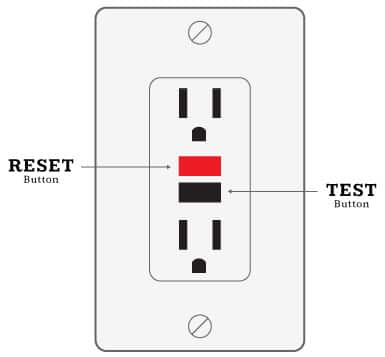
GFCI outlets exist to protect people from electrical shock . The GFCI is integrated in the outlet itself. When you plug in an appliance, such as a hair dryer, the GFCI outlet monitors the amount of power going to the device. If you accidentally drop the appliance into sink full of water, the GFCI detects the interruption in current and cuts the power and possibly saves your life.
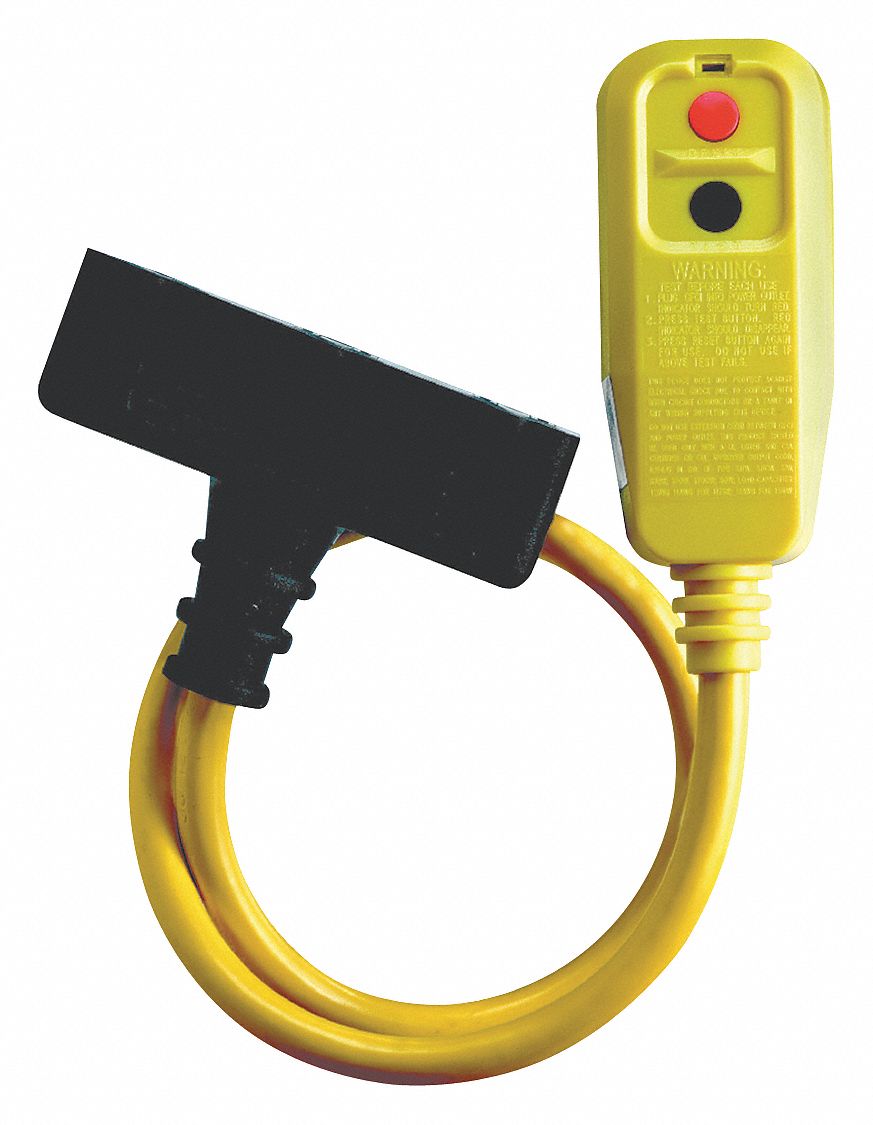
When installing Christmas Lights, we recommend you use a GFCI protector like below. This is temporary only while you install the lights so you don’t trip a GFCI in the house that you don’t have access to reset. A simple staple through the line can cause a GFCI to trip sending your install into a tailspin.
Tripped Circuits
Tripped circuits can be a nightmare if you don’t plan ahead. Using a temporary GFCI protector like we mentioned in the earlier lessons is very important when installing the lights. This will help prevent you from tripping a circuit or GFCI that you don’t have access to and shutting down you job site.
Here are some possible causes that may have tripped a circuit.
- More power than the outlet can handle
- Connections on the ground
- Irrigation or snow (water)
- Staples in the wire Bad light strand
If you should encounter either a tripped circuit or GFCI, you will need to determine the cause, see above, once you have determined the cause, you will need to locate and reset the tripped circuit or GFCI.
Circuits
Typically, every home has one main electrical panel that controls the amount of electricity entering the home. Sometimes, there’s also a “sub-panel” that controls various circuits in a different area. The main panel will most likely be found in a closet, basement, garage, laundry room, or even outside. It’s a bit of an eye sore, usually a large metal box looking thing affixed to the wall. Which is probably why it’s hidden.
The double-pole circuit breaker at the top is the on/off switch for power to the entire home. Do NOT turn off the main breaker except during emergencies, such as floods or fires.
To reset a breaker, move the switch all the way to its ‘off’ position, then back to ‘on’. You might hear a few beeps from smoke detectors and appliances when you turn the power back on, but that’s normal.
GFCI’s
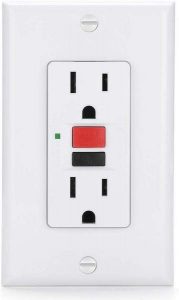
GFCI’s, ground fault circuit interrupter, are typically found anywhere around the home that is a damp environment. Commonly they are located (or should be) at bathrooms, kitchen countertops, laundry areas, unfinished basements, crawl spaces, garages and at exterior outlets.
When a GFCI outlet is not working, chances are it was tripped. There are several reasons a GFCI outlet might trip, including an internal short in the appliance you’re using, moisture in the GFCI outlet itself, dust or debris in the outlet or around the plug, or worn insulation on the plug.
To reset a GFCI outlet, look carefully at the two little buttons on the front of the outlet. Press the one that says RESET. Usually, the RESET button is red, while the TEST button is black.
Bush and Tree Wiring
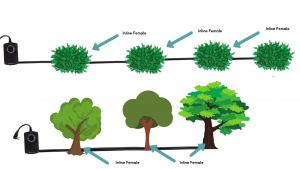
Wiring bushes and trees that are close together has become and easier task with the use of X-wire. In the above illustration, it demonstrates utilizing inline females to power each bush or tree. You will need to keep in mind your power limitations when running multiple trees or bushes’ off the same x-wire. Most X-wire will be 7 amp rated allowing you to run upwards of 185 strands on the same power source. Make sure you look at your strands wattage to determine an accurate max load.
Routing Cords

This may seem like an obvious and simple task but you would be surprised how many installers don’t take it serious. Routing cords properly is not only a good habit to get into to maintain professionalism but also an important job when it comes to safety. Here are a some things to keep in mind when routing cords in different applications.
Across sidewalks
You may encounter an install where you have to run extension cords across a sidewalk. In most instances, the cracks in the sidewalk will fit X-wire perfectly allowing you to safely install without causing a tripping hazard. Just placing the cord in the crack will not be sufficient enough so you will need to break out your glue gun for this application.
If no cracks are available, you can also use cable covers to hide cords and also help prevent tripping hazards.

Downspouts
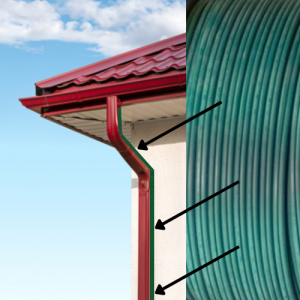
Hiding cords using the downspout on a residential house is a great way to maintain professionalism. Depending on the downspout, you may need to use a couple dabs of glue to secure it. You want to avoid having to zip tie or tape cords to downspouts, this will only require you to need a ladder on takedown.
Grass
Using lawn staples to hide cords in grass is a great way to eliminate tripping hazards. You do want to be aware of gardeners and make sure the homeowner makes them aware of them so they don’t end up cutting them with their mowers.